
Last Updated: November 14, 2026
Quick Summary
You can avoid fast fashion on a budget by shifting from price-per-item thinking to cost-per-wear thinking, dividing each item's price by how many times you will realistically wear it. Set a monthly clothing budget, make a list before shopping, and wait 48 hours before any impulse purchase. Buying less is the single biggest lever you have.
- Identify fast fashion by very low prices, constant new drops, and dozens of near-identical trend pieces.
- A $60 jacket worn 60 times costs $1 per wear; a $15 top worn twice costs $7.50 per wear.
- Wash at the lowest temperature that works, turn garments inside out, and air-dry knits flat.
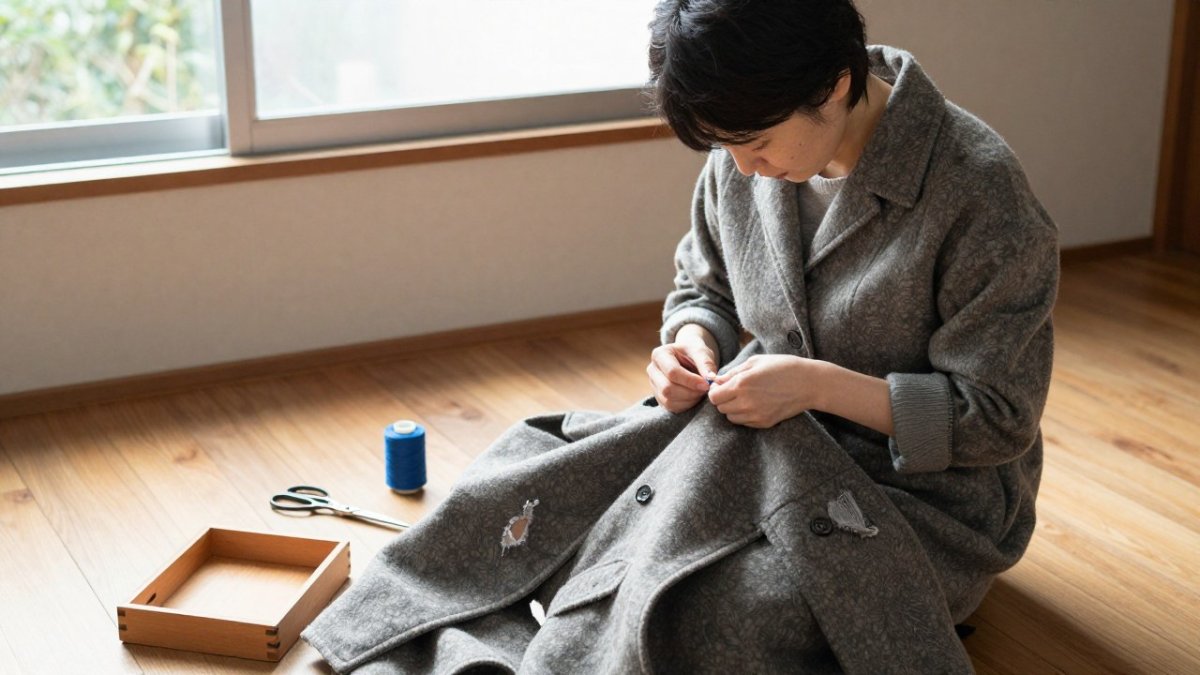
- Learn to reattach buttons, close seams, fix hems, darn holes, and patch knees to extend garment life.
- Follow the transition plan: audit in week 1, pause purchases in week 2, repair in week 3, thrift in week 4.
Table of Contents
- Why Fast Fashion Is Hard to Quit (and What It Really Costs)
- How to Identify Fast Fashion Brands Before You Buy
- Fast Fashion Brands to Avoid and Why
- Fast Fashion Alternatives That Fit Real Life
- How to Avoid Fast Fashion on a Budget
- Build a Smaller Wardrobe You Actually Wear
- How to Avoid Fast Fashion by Extending What You Own
- How to Evaluate Sustainability and Ethical Claims
- Your Step-by-Step Transition Plan
- Shop Smarter at Myriad Mart
- Frequently Asked Questions
Why Fast Fashion Is Hard to Quit (and What It Really Costs)
Learning how to avoid fast fashion starts with understanding why those $12 tops feel so hard to pass up. Fast fashion is a business model built on rapid production of trendy clothes at very low prices. It works because it gives you instant style with almost no financial risk.
But that low price hides real costs. Fast fashion can be both harmful and advantageous depending on whether you weigh environmental, social, or economic impacts. Most of us only ever see the economic side. The rest gets buried.
What we do want is for you to spend smarter, buy pieces that last, and stop feeding a system that churns through clothes and people alike.
The Environmental and Human Cost Behind Cheap Clothes
Cheap clothes carry a hidden bill. The fashion industry relies on overproduction and overconsumption, and that drives textile waste, water use, and carbon emissions. Garment workers often face poor labor conditions and low pay, especially across global supply chains.
The problem is not just what we buy, it is how much we buy. Buying less is the single biggest lever you have.
How to Identify Fast Fashion Brands Before You Buy
You can identify fast fashion brands by three signals: very low prices, constant new drops, and dozens of near-identical trend pieces each season. If a brand releases hundreds of new styles every week and sells tops for the price of a coffee, that is the model.
Here is what to look for:
- New arrivals weekly or faster. Constant drops signal trend-chasing, not quality.
- Rock-bottom prices on complex garments. A lined coat or tailored trousers cannot be made well for pocket change.
- Trend-first design. If the whole catalog mirrors this month's runway, it is fast fashion.
- Vague fabric info. "Premium blend" with no percentages is a red flag.
- No repair or take-back program. Brands built to last usually help you keep things going.
The sustainable shopper's guide to ditching fast fashion recommends thinking secondhand first and considering rentals for one-off needs. That advice alone filters out most fast fashion.
A Practical Garment-Quality Checklist
Run every potential purchase through this checklist before you pay:
- Fabric composition label. Look for natural fibers like cotton, wool, hemp, or silk, or clear synthetic blends. If the label is missing or vague, walk away.
- Stitching and seams. Check for tight, even stitches and no loose threads. Pull gently at a seam. It should hold.
- Fabric weight. Hold it up to the light. Thin, see-through fabric rarely survives many washes.
- Buttons and zippers. Give them a tug. Cheap hardware fails first.
- Lining and finishing. A lined jacket or skirt signals more care in construction.
- Care label. If it demands dry cleaning only, factor that cost in.
For a deeper walkthrough, our guide on signs of well-made clothing covers what to check in person and online. If you mostly shop online, how to find quality clothing online walks through reading listings and spotting quality before you buy.
Fast Fashion Brands to Avoid and Why
There is no single list of fast fashion brands to avoid, because the model matters more than the name. Still, certain patterns give brands away: ultra-low prices, relentless trend cycles, and little transparency about where clothes are made.
Ask these questions before you commit:
- Does the brand publish its factory list or sourcing info?
- Are prices so low that fair wages seem impossible?
- Does it push urgency, like "only 2 left" on a brand-new drop?
- Does it offer any repair, resale, or recycling program?
If the answer to most of these is no, treat it as fast fashion and shop accordingly. You do not need to boycott every store. You just need to buy less from the ones built on churn.
Fast Fashion Alternatives That Fit Real Life
Real alternatives exist, and they do not require a big budget. The sustainable fashion guidance from Sustain Your Style puts it simply: buy less, buy better quality, and think twice before throwing clothes away.
Here is what works in practice:
- Secondhand and thrift stores. Great for basics, denim, and one-off pieces.
- Clothing swaps. Free, social, and a good way to refresh your wardrobe.
- Rental services. Smart for formalwear or one-event outfits.
- Vintage shops. Often better construction than new fast fashion.
- Smaller, quality-focused labels. Fewer drops, better fabrics.
Worried that budget-friendly stores are a trap? Our breakdown of whether budget-friendly clothing stores are worth it helps you judge value before you spend.
How to Avoid Fast Fashion on a Budget
You can avoid fast fashion on a budget by shifting from price-per-item thinking to cost-per-wear thinking. That single change reshapes every buying decision.
Start with these habits:
- Set a monthly clothing budget and stick to it.
- Make a list before you shop, and buy only what is on it.
- Wait 48 hours before any impulse purchase.
- Shop end-of-season sales for classic pieces, not trends.
- Check resale sites first for anything on your list.
The goal is not to spend more. It is to spend once on things you will actually wear.
Cost per Wear: The Math That Changes Everything
Cost per wear is simple: divide the price by the number of times you wear it. A $60 jacket worn 60 times costs $1 per wear. A $15 top worn twice costs $7.50 per wear. The cheap item is the expensive one.
Try this quick formula:
Cost per wear = Price ÷ Times worn
Before buying, estimate how often you will realistically wear it. If the number feels low, skip it. This one calculation kills most impulse shopping.
Build a Smaller Wardrobe You Actually Wear
A smaller wardrobe beats a stuffed closet every time. Fewer, better pieces mean less decision fatigue, less waste, and more outfits that actually work.
Here is how to start:
- Pull out everything you wore in the last month. That is your real wardrobe.
- Set aside anything you have not worn in a year.
- Keep pieces that fit well and mix easily.
- Fill gaps with quality basics, not trend pieces.
For a full method, our guide on how to build a capsule wardrobe that actually works shows how to plan a small set of pieces that cover most of your week.
How to Avoid Fast Fashion by Extending What You Own
The cheapest, greenest clothing is the clothing you already own. Extending garment life is the most direct way to avoid fast fashion without spending a cent. The biggest gains usually come from changing how you wash, dry, store, and repair clothes, not from buying special products.
Wash less, wash colder, and wash smarter
Every wash cycle breaks down fibers and fades color. The goal is to wash only when a garment is actually soiled, and to make each wash as gentle as possible.
-
Wash at the lowest temperature that gets the job done. Cool water is fine for most everyday garments and protects fibers and dyes. Reserve warm or hot water for towels, sheets, and items that are genuinely soiled.
-
Turn garments inside out before washing to reduce surface abrasion and pilling.
-
Use a mesh laundry bag for knits, delicates, and anything with a loose seam. It keeps the garment from stretching and snagging.
-
Close zippers and fasten buttons before washing to prevent snags.
-
Wash denim less often. Spot-clean and air out jeans between washes; frequent washing is what wears out the knees and fades the indigo.
Watch out: "dry clean only" labels are not always the final word, so check the care label carefully before washing anything at home.
Air-dry whenever you can
Dryer heat is one of the fastest ways to thin fabric and shrink garments. A drying rack or a clothesline costs little and adds years to clothes.
- Air-dry knits flat on a towel or mesh rack so they do not stretch out of shape on a hanger.
- Hang woven shirts and trousers to dry; the weight of the water helps smooth wrinkles.
- Use the dryer only for towels, sheets, and socks, and use the lowest heat setting.
- Remove garments from the dryer while slightly damp if you must use it, then hang to finish drying.
Store clothes so they last
The way you store clothes determines whether they keep their shape and resist moths and mildew.
-
Fold knits; do not hang them. Hanging stretches shoulders and lengthens the garment over time.
-
Hang structured pieces (jackets, coats, tailored trousers) on shaped hangers.
-
Store clean. Body oils and food stains attract moths and set over time; wash or spot-clean before storing for the season.
-
Rotate your wardrobe so the same pieces are not worn and washed on repeat; give fibers a rest between wears.
Learn the repairs that save the most garments
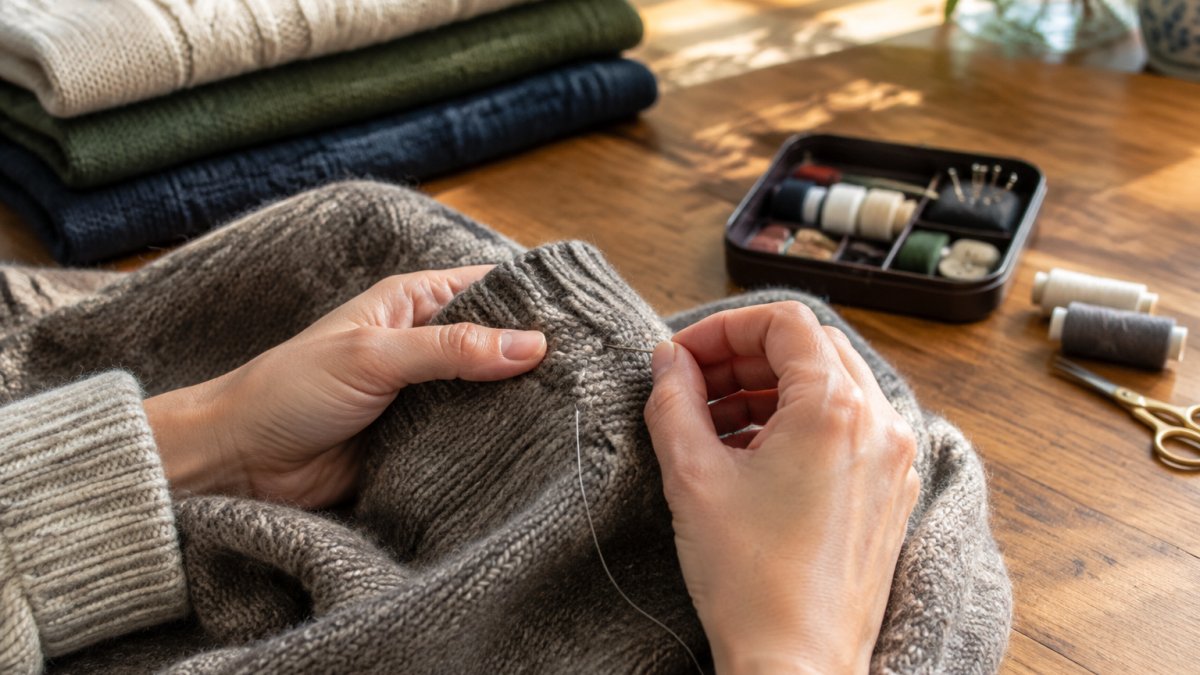
A needle, thread, and ten minutes fix most of what sends clothes to the trash. The highest-value repairs to learn first:
- Reattach a button. Keep spare buttons that come with garments; if you have none, a matching button from a sewing kit works.
- Close a seam. Turn the garment inside out, stitch along the original seam line with a simple running stitch, and backstitch at both ends.
- Fix a hem. A blind hem stitch hides the thread on the outside; iron the hem flat before stitching.
- Darn a small hole. Use a darning needle and matching yarn to weave across the hole in a grid, then weave the opposite direction. This works well on socks, sweaters, and denim.
- Patch a knee or elbow. An iron-on patch on the inside, or a visible patch on the outside, extends the life of workwear and kids' clothes.
If a repair is beyond your skill, a local tailor or alterations shop can fix a seam or hem. Ask for a quote before you decide.
Alter instead of replace
Fit is the most common reason people stop wearing a garment. A tailor can take in a waist, shorten a hem, or adjust straps for a fraction of the price of a new item.
- Hem trousers or jeans that are too long; this is one of the cheapest alterations.
- Take in a waist on skirts or trousers that have stretched.
- Shorten sleeves on jackets or shirts that feel dated.
- Adjust straps on dresses or tops that slip.
Before you buy anything new, ask whether an unworn item in your closet could be altered into something you would wear.
Repurpose what cannot be repaired
When a garment is truly worn out, it can still have a second life.
- Old tees become cleaning rags, sleepwear, or garden ties.
- Worn denim becomes patches, tote bags, or quilt squares.
- Fabric scraps become cleaning cloths or stuffing for pet beds.
When nothing else works, check textile recycling options near you before it hits the trash. Many municipalities and retailers accept textiles for recycling, and some offer drop-off bins. Keeping garments in use, in any form, is the goal.
How to Evaluate Sustainability and Ethical Claims
Sustainability claims are everywhere, and many are vague. Shoppers often find it hard to judge a garment's real impact, and that confusion is understandable.
The practical problem is that most claims are unverifiable at the point of sale. "Eco-friendly," "conscious," and "planet-positive" are marketing words, not standards. To evaluate a claim, you need to know what a credible one looks like and where to check it. Use the four-step filter below.
Step 1: Separate specific claims from vague ones
A specific claim names a material, a percentage, a process, or a certification. A vague claim names a feeling. Compare these:
- Specific: "100% organic cotton, GOTS certified." "Recycled polyester made from 12 plastic bottles." "Living wage paid at a named factory."
- Vague: "Made with sustainable materials." "Consciously crafted." "Better for the planet."
If a brand cannot move from the vague column to the specific column when you ask, treat the claim as marketing. A common pattern is a landing page full of nature imagery and a product page with no fiber percentages at all.
Step 2: Check for third-party certifications, not brand logos
A brand's own leaf icon means nothing. A certification from an independent body means something because it requires an audit. The certifications you are most likely to see on apparel in the United States include:
- GOTS (Global Organic Textile Standard) for organic fiber content and processing.
- OEKO-TEX Standard 100 for tested chemical safety in the finished garment.
- bluesign for resource and chemical management in textile production.
- Fair Trade Certified for social and labor standards at certified facilities.
- B Corp Certification for a company's overall social and environmental performance, not a single garment.
- Cradle to Cradle Certified for material health and circularity.
Watch out: a certification logo can be printed on a hangtag without the product actually being certified. Check the certification body's public database using the brand or license number before you trust the label.
Step 3: Ask supply-chain questions a brand can actually answer
Transparency is testable. A brand that knows its supply chain can tell you, at minimum, which countries and which factories make its clothes. Many publish a supplier list or a factory map. A brand that cannot name a single factory is not transparent, regardless of what its sustainability page says.
Ask or check:
- Does the brand publish a supplier or factory list?
- Does it disclose tier-one factories (cut-and-sew) and, ideally, fabric mills?
- Does it publish audit results or wage information?
- Does it have a public code of conduct with enforcement details?
If the answer to the first two is no, the rest of the sustainability story is unverifiable.
Step 4: Watch for the common greenwashing patterns
Greenwashing rarely looks like an outright lie. It usually looks like a true but irrelevant statement. Common patterns:
- A single green product line in an otherwise fast-fashion catalog. One capsule collection does not change the business model.
- Recycled content as the whole story. Recycled polyester still sheds microfibers and is still plastic; the recycling claim does not address overproduction.
- Offsetting instead of reducing. Carbon offsets do not make a garment low-impact.
- Vague future goals. "By 2030 we will..." is a pledge, not a current standard.
- Certifications on the company, not the product. A B Corp score says something about the business, not the specific shirt.
A useful test: if the claim would survive being read aloud to a skeptical friend, it is probably specific enough to check. If it sounds like a slogan, it is one.
What to do when you cannot verify
You will not always be able to verify a claim before you buy. In that case, fall back on what you can observe: fabric composition, construction quality, and whether the brand's overall model looks like fast fashion. A garment with a clear fiber label, solid seams, and a brand that publishes its factories is a better bet than a garment with a green hangtag and no information. If a brand cannot tell you where and how a garment was made, treat the claim as marketing and let your cost-per-wear math decide.
Your Step-by-Step Transition Plan
You do not have to overhaul your wardrobe overnight. Follow this plan over the next few months:
- Week 1: Audit. Sort your closet and note what you actually wear.
- Week 2: Pause. Stop all clothing purchases for two weeks. Notice the urge to buy.
- Week 3: Repair. Fix two items you already own.
- Week 4: Swap or thrift. Try one secondhand or swap purchase.
- Month 2: Build a list. Write down real gaps in your wardrobe.
- Month 3: Buy better. Fill those gaps with quality pieces, one at a time.
Track your cost per wear as you go. Most people find their spending drops while their satisfaction rises.
Here is the timeline the article lays out for moving away from fast fashion without overhauling everything at once.
| When | What to do |
|---|---|
| Week 1 | Audit your closet and note what you actually wear |
| Week 2 | Pause all clothing purchases for two weeks |
| Week 3 | Repair two items you already own |
| Week 4 | Try one secondhand or swap purchase |
| Month 2 | Write down real gaps in your wardrobe |
| Month 3 | Fill those gaps with quality pieces, one at a time |
Shop Smarter at Myriad Mart
You do not have to choose between style and smart spending. At Myriad Mart, you can find seasonal apparel and accessories, so you can buy fewer, better things and still look current. For current prices, visit the Myriad Mart website.
Here is how Myriad Mart can help you shop with intention:
- One marketplace for a wide variety of categories. Find many items in one place.
- Seasonal and trend-focused apparel. Stay current with seasonal fashion trends.
Browse our women's clothing and accessories collection to start building a wardrobe you will actually wear.
Avoiding fast fashion is not about perfection. It is about buying with a little more thought each time you shop. Start with one repair, one secondhand find, or one smarter purchase this month. Get started with Myriad Mart and shop seasonal styles that fit your budget and your values.
Frequently Asked Questions
How can I avoid fast fashion on a budget?
Start with cost per wear instead of the price tag. A $60 jacket worn 60 times costs $1 per wear; a $20 jacket worn twice costs $10 per wear. Shop secondhand and thrift stores first, buy fewer pieces each season, and repair what you already own. Clothing swaps with friends or community groups also refresh a wardrobe at no cost, and buying better-quality basics on sale beats buying cheap trend pieces repeatedly.
How can I tell whether a clothing brand is fast fashion?
Look at how often the brand drops new styles. Weekly or near-weekly collections, hundreds of trend pieces, and prices far below what the fabric and construction would normally cost are strong signals. Check the clothing label for fabric composition: a high share of thin polyester with loose stitching and unfinished seams points to short garment life. Brands that publish supplier lists and wage information are more likely to be transparent about labor conditions.
What are the best fast fashion alternatives?
Secondhand and vintage stores, clothing swaps, and rental services for one-off needs are the most direct alternatives. For new purchases, look for brands that publish fabric composition, offer repair support, and sell classic styles rather than short trend cycles. Natural fibers such as cotton, wool, and hemp tend to hold up longer than thin synthetics. Buying less and choosing better quality reduces textile waste more than swapping one cheap brand for another.
What should I do with clothes I no longer wear?
Sort by condition first. Wearable items can be donated, swapped with friends, or sold secondhand. Damaged pieces are worth repairing if the fabric is sound; a seam fix or button replacement extends garment life significantly. Items beyond repair can go to textile recycling programs rather than the trash. Thinking twice before throwing clothes away keeps usable garments in circulation and cuts the environmental impact of overproduction.

