
Last Updated: November 7, 2026
Quick Summary
A budget-friendly clothing store is worth your money when a garment's total cost divided by the number of times you wear it lands below what you'd pay for a single outing in something pricier. Judge budget-friendly clothing on fabric that survives a wash cycle, a return policy that doesn't punish you, and real cost per wear.
- A $90 coat worn 90 times costs $1 per wear; a $25 top worn twice costs $12.50 per wear.
- Clearance and sale sections at retailers you already trust are the best source of quality clothing at low prices.
- Set a per-item ceiling and a per-season total, and wait 72 hours before buying.
- A $40 top with $8 shipping and a $7 return label costs $55 if it doesn't fit.
- Build a capsule wardrobe from 20-30 pieces chosen for fit and fabric rather than trend.
Table of Contents
- What Makes a Budget-Friendly Clothing Store Worth Your Money
- Affordable Clothing Stores Online vs. In-Store Shopping
- How the Best Affordable Clothing Brands Keep Prices Low
- Where to Find High-Quality Clothes for Cheap
- Fabric, Fit, and Cost Per Wear: What Separates Deals From Regrets
- Cheap Clothes Shopping Tips That Protect Your Budget
- Inclusive Sizing and Fit at Budget Prices
- Shipping, Returns, and the True Total Purchase Cost
- Building a Capsule Wardrobe With Budget-Friendly Clothing
- Start Your Next Wardrobe Refresh at Myriad Mart
- Frequently Asked Questions
What Makes a Budget-Friendly Clothing Store Worth Your Money
Shein now holds a 50% market share of the fast fashion sector, according to Uniform Market's fast fashion statistics, and that dominance tells you something important: price alone wins a lot of shoppers. But price alone doesn't build a wardrobe you actually wear. Customers who cycle through cheap haul after cheap haul often end up dissatisfied, while the ones who end up satisfied judge a budget-friendly clothing store on three things: fabric that survives a wash cycle, a return policy that doesn't punish you, and a real cost per wear.
A budget-friendly clothing store is worth your money when the total cost of owning a garment, divided by the number of times you wear it, lands below what you'd pay for a single outing in something pricier. That's the whole test. Everything else, from trend speed to influencer hype, is noise.
Below, we'll show you exactly how to run that math, which shopping channels actually save you money, and where the best budget friendly clothing stores earn their keep. We'll also flag the traps that turn a $20 deal into a $20 regret.
Affordable Clothing Stores Online vs. In-Store Shopping
Online wins on selection and price transparency; in-store wins on fit certainty and instant gratification. The right split depends on what you're buying. For basics and outerwear, online shopping can offer lower prices because retailers skip some storefront overhead. For anything where fit is unpredictable, like tailored pieces or denim, in-store shopping still earns its trip.
Here's how we'd split a typical wardrobe refresh:
| Purchase Type | Better Channel | Why |
|---|---|---|
| Basics and tees | Online | Lower prices, easy reorder |
| Outerwear and coats | Online | Wider size range, deeper discounts |
| Denim and trousers | In-store first | Fit varies wildly by cut |
| Occasion wear | Online | Sample sales and clearance |
| Shoes | In-store | Sizing inconsistency |
One thing nobody tells you about online budget shopping: the product page photos are staged under studio light. Read the material composition and the measurement chart before you add to cart, not after the box arrives. Our corduroy high waist flare pants page, for example, lists full measurements so you can compare against a pair you already own.

How the Best Affordable Clothing Brands Keep Prices Low
The best affordable clothing brands keep prices low through supply chain speed, not through magic. Zara built its reputation by tightening the gap between design and shelf, a model documented in ResearchGate's analysis of fast fashion supply chains, and that speed lets brands sell trend pieces before markdown season hits. But speed alone doesn't explain why a $12 tee from one brand outlasts a $12 tee from another. The difference comes down to three levers, and each one carries a trade-off you can evaluate before you buy.
Volume commitments. Brands that commit to large orders early lower their per-unit cost. Retailers that order in large volumes can often pay less per unit than smaller buyers. That savings can be passed to you, but it also means the brand is locked into a fabric and fit decision months before you see the product. If the fit is off, you're the one who discovers it.
Fabric substitution. Polyester blends cost less than cotton or wool. That's not automatically bad, polyester resists wrinkles and holds color, but it changes how the garment wears and washes. A 60/40 cotton-poly blend may pill faster than 100% cotton, while a polyester fleece may outlast a cheap cotton one. Read the composition label and think about how you'll care for the item. A garment that requires dry cleaning can erase the savings over a year.
Markdown timing. End-of-season clearance moves inventory at cost rather than storing it. This is where budget shoppers win, but the trade-off is selection: you're buying what didn't sell, in the sizes and colors that remain. Clearance timing varies by season, with end-of-season sales often offering the best prices on items retailers are clearing out.
A fourth lever, less discussed, is private-label production. Many budget retailers design and manufacture their own lines, which can reduce brand markup. The quality varies, but the cost-per-wear math can favor private label if the fabric and construction hold up.
The trade-off is real. Uniform Market notes that fast fashion models face criticism for environmental impact and sustainability challenges. If labor practices and materials matter to you, budget-friendly fashion and ethical sourcing can coexist, but you have to read the label and the brand's published practices rather than assume. A practical starting point: look for brands that publish factory lists or participate in third-party audits, and treat those disclosures as a signal, not a guarantee.
Watch out: a low price achieved through fabric substitution can cost more per wear if the garment pills, shrinks, or loses shape after a few washes. Always check the care label and return policy before committing.
Where to Find High-Quality Clothes for Cheap
High-quality clothes for cheap come from four places: end-of-season clearance, outlet and overstock sellers, secondhand and resale, and well-chosen private-label basics. The vintage and thrift market is projected to reach $126.6 billion by 2033, according to OpenSend's secondhand apparel projection, which tells you resale is no longer a niche.
A shortlist of common shopping channels, ranked by value for money:
- Clearance and sale sections at retailers you already trust. Marked-down styles from last season are the single best source of quality clothing at low prices.
- Secondhand and consignment. Quality per dollar can be high, though sizing is one-of-a-kind.
- Outlet and overstock. Good for staples, uneven for trend pieces.
- Curated marketplaces. Places that let you compare price, fit details, and returns in one spot.
A reader looking for quality denim at a low price should look at construction first: check the stitching at stress points and the weight of the fabric. Our Risen tummy control high rise straight jeans show the kind of detail worth comparing, including a full measurement table.
Fabric, Fit, and Cost Per Wear: What Separates Deals From Regrets
Cost per wear is the price of a garment divided by the number of times you realistically wear it. A $90 coat worn 90 times costs $1 per wear. A $25 top worn twice costs $12.50 per wear. The cheaper item lost.
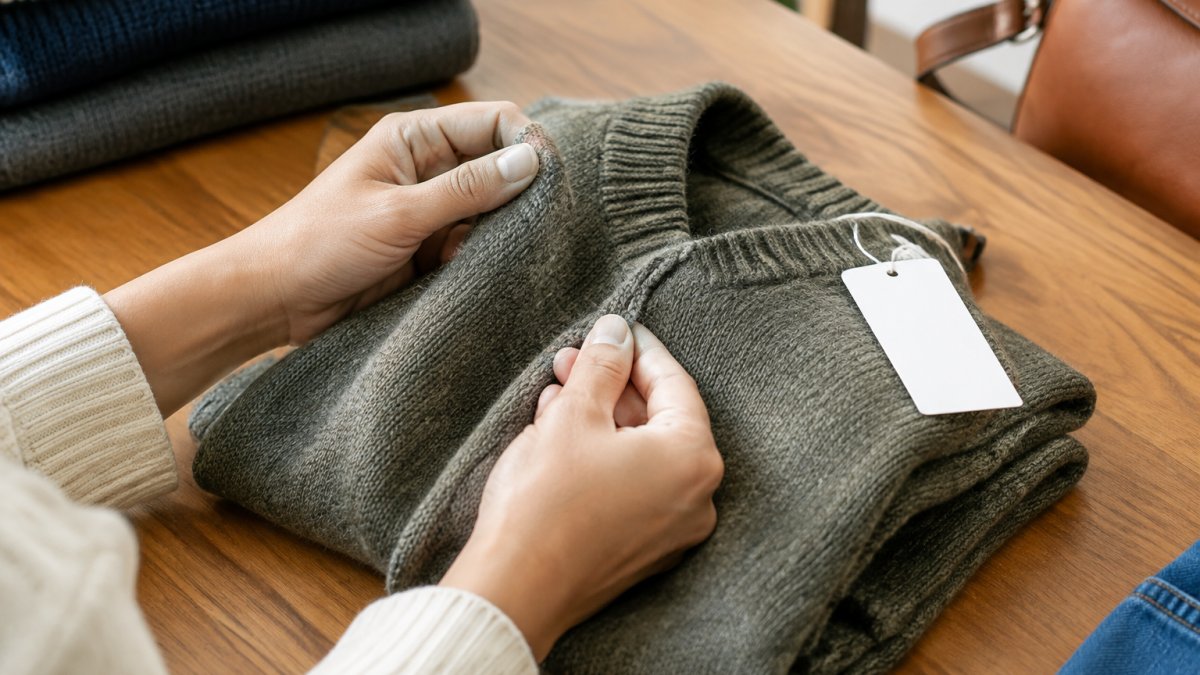
Run this checklist before you buy anything:
- Does the fabric composition suit the season and the care you'll actually give it?
- Do the listed measurements match a garment you already own and love?
- Is the seam stitching tight and even at shoulders and pockets?
- Will this pair with at least three things already in your closet?
- Is the return window long enough to try it on properly?
Watch out: a garment that requires dry clean only can cost more over a year than the purchase price. Our Risen high rise wide leg jeans with cuffed hem are a better bet for heavy rotation because they're built for everyday wear rather than occasional outings.
Cheap Clothes Shopping Tips That Protect Your Budget
Cheap clothes shopping tips that actually work all share one trait: they slow you down before checkout. The biggest mistake is buying because the price is low, not because the piece fills a gap.
Try these:
- Set a per-item ceiling and a per-season total. Knowing both stops impulse adds.
- Shop the sale section first, new arrivals second. New arrivals are full price by definition.
- Build a wishlist and wait 72 hours. Most regretted purchases don't survive the wait.
- Compare price per wear, not sticker price. A $60 sweater you wear weekly beats a $20 one you wear once.
- Check the return policy before you buy. A generous window turns a risky purchase into a low-risk one.
What most guides miss is that discounts stack unevenly. A 40% off sale on already marked-down clearance beats a 20% off sitewide code almost every time. Do the math on the final number, not the percentage.
Inclusive Sizing and Fit at Budget Prices
Inclusive sizing at budget prices is achievable, but it requires reading measurement charts instead of assuming a size label means the same thing across brands. rank as top destinations for affordable family wardrobes in 2026, per Pendium's affordable clothing store research, largely because they publish consistent sizing and run frequent sales. But consistency varies by category and by brand, so the smartest approach is to build a personal size profile before you shop.
Start by measuring yourself, bust, waist, hips, inseam, and sleeve length, and write those numbers down. Then compare them to each retailer's size chart, not to the size you "usually" wear. A medium at one budget retailer can fit like a large at another. For online shopping, look for product pages that list garment measurements (not just body measurements) so you can compare against a piece you already own and love.
For plus-size shoppers, look for pieces designed with extended sizing from the start rather than scaled-up versions of a straight-size pattern. Brands that grade patterns specifically for plus sizes tend to fit better at the bust, waist, and hip. Our plus size faux fur hooded winter parka runs from M to 3XL with a full bust and sleeve measurement table, so you can match it to your own numbers before ordering.

For petite and tall shoppers, the key is inseam and rise. Petite and tall sizes adjust the inseam and rise to suit different proportions. If a retailer doesn't offer petite or tall, look for cropped or ankle-length styles that work with your proportions, or plan to hem.
Watch out: buying to your largest measurement and tailoring down is usually safer than sizing down and hoping a garment stretches. Taking in a waistband is cheap; letting out a seam often isn't. Always check the return window before ordering multiple sizes to try on at home.
Shipping, Returns, and the True Total Purchase Cost
The true total purchase cost is the item price plus shipping plus the cost of returns you actually make, minus anything you save. A $40 top with $8 shipping and a $7 return label costs $55 if it doesn't fit. That's the number to compare, not the $40 on the tag.
Three questions to ask before checkout:
- What's the free shipping threshold? Hitting it with items you need is a win; padding a cart to hit it is not.
- Who pays return shipping? This single policy can swing a purchase by 15-20%.
- How long is the window? Short windows pressure you into keeping things that don't fit.
According to Reuters' reporting on Gen Z apparel shopping habits, Shein narrowly beat Amazon as the most likely online site for Gen Z apparel purchases, and low prices plus easy checkout drive much of that. Easy checkout and easy returns are not the same thing. Read the policy page before you commit.
Building a Capsule Wardrobe With Budget-Friendly Clothing
A capsule wardrobe built on budget-friendly clothing starts with 20-30 pieces that mix freely, chosen for fit and fabric rather than trend. Fewer, better-chosen items mean lower cost per wear and less decision fatigue every morning.
Start with these categories:
- 5 tops in neutral and one accent color
- 3 bottoms that each pair with all five tops
- 2 layers for transitional weather
- 1 outerwear piece built for your coldest month
- 2 pairs of shoes that work across occasions
For the loungewear slot, our casual drawstring high waist wide leg sweatpants fit the capsule brief: versatile, easy to style, and priced for a budget rotation. Build slowly. Adding one well-chosen piece a month beats a single large haul every time.

Start Your Next Wardrobe Refresh at Myriad Mart
The challenge isn't finding cheap clothes. It's finding pieces that survive the wash, fit the first time, and earn their place in your rotation. At Myriad Mart, you can find a wide variety of seasonal and trend-focused apparel alongside fragrances, accessories, and home pieces in one marketplace.
You can find high-quality, in-demand products at exceptional prices and stay current with seasonal fashion trends. Start with one category, compare cost per wear, and build from there.
Get started with Myriad Mart and refresh your wardrobe for less this season.
Frequently Asked Questions
Where can I buy cheap but high-quality clothes?
Look for stores that publish fabric composition and full size measurements on every product page. Polyester blends with a bit of elastane, like the 95% polyester and 5% elastane Lapel Collar Long Sleeve Blazer at $39.45, are one option to compare. Read the care instructions before you buy: machine-washable pieces cost less to own over time than dry-clean-only items. Budget-friendly clothing stores that show measurements for each size, not just a generic size chart, tend to have fewer fit surprises and lower return rates.
Are online clothing stores cheaper than shopping in person?
Online stores often skip the overhead of physical retail space, and that can show up in lower prices on basics and outerwear. The trade-off is that you cannot try items on, so check the listed measurements against a garment you already own. Factor in shipping and return costs before you decide. A $45 cardigan with free returns can cost less than a $35 one with a $7 return fee. Compare the total, not the sticker price.
How can I find affordable clothes that last?
Track cost per wear instead of the price tag. Track cost per wear by dividing the price of a garment by how often you wear it. For example, the $57.45 Cable-Knit Open-Front Longline Cardigan costs less per wear the more often you wear it. Check fabric weight, seam construction, and whether the item is lined. Thicker fabrics and reinforced seams generally survive more laundry cycles. Also confirm the care instructions match your routine, since hand-wash or dry-clean-only pieces add hidden costs.
What should I look for when buying budget-friendly clothing?
Start with the fabric composition and the size measurements for your specific size. A product page that lists bust, sleeve length, and top length for each size lets you compare against a garment you own. Check the return policy and any shipping fees. Look at whether the item is lined or unlined, since unlined jackets layer differently. Finally, check the care label: machine wash cold and tumble dry low keeps ownership costs down, while dry-clean-only pieces need a bigger budget.

