Table of Contents
- Why Shoppers Are Hunting for a Target Alternative for Trendy Clothes
- What to Compare Before You Switch: Price, Fit, and Fabric
- Stores Like Target for Clothes: What Makes a Good Swap
- Affordable Trendy Clothing Stores: Where the Value Actually Is
- Sustainable Alternatives to Target: Sorting Real Claims From Marketing
- Trendy Clothes by Occasion: Denim, Outerwear, and Swimwear Picks
- Shipping, Returns, and In-Store Availability: The Fine Print
- How Often Collections Refresh: Staying Ahead of Seasonal Fashion
- Common Mistakes When Choosing a Target Alternative for Trendy Clothes
- Conclusion: Building a Wardrobe That Works for Your Budget
- Frequently Asked Questions
Last Updated: October 12, 2026
Why Shoppers Are Hunting for a Target Alternative for Trendy Clothes
Shoppers looking for a Target alternative for trendy clothes are usually chasing three things at once: lower prices, better fabric, and a selection that does not sell out before they get to checkout. This guide from Myriad Mart breaks down what actually matters when you swap where you buy, from starting prices to how often collections refresh.
The frustration is real. Big-box retailers rotate inventory fast, but the pieces that survive to the clearance rack are often the ones nobody wanted. Meanwhile, the items people actually saw on social media vanish within days. That gap between what you want and what is left on the shelf is exactly what drives shoppers to look elsewhere.
Below, we walk through what to compare before switching, which categories deliver the best value, and how to spot a genuinely sustainable option instead of a marketing label. We also flag the mistakes that cost people money on their first swap.
What to Compare Before You Switch: Price, Fit, and Fabric
Three factors decide whether a new store works for you: what you pay up front, how the sizing runs, and whether the fabric holds up past the third wash. Get those right and the switch feels effortless. Get them wrong and you end up returning half your order.
Starting Prices and What They Actually Buy You
A lower price means nothing if the garment falls apart in a month. Compare cost per wear, not sticker price. A $55 jacket you wear forty times beats a $25 jacket you wear twice.
At Myriad Mart, outerwear starts at $37.45 for the VERY J Fuzzy Leopard Long Sleeve Hooded Jacket and runs to $66.45 for the Coalition LA Snap Down Cropped Hooded Jacket. Denim sits at $63.45 across both the RISEN Slouchy Baggy Jeans and the Judy Blue High Waist Wide Crop Utility Jeans. That is the range to benchmark against when you shop.
| Product | Category | Starting Price | Fabric | Best For |
|---|---|---|---|---|
| VERY J Fuzzy Leopard Hooded Jacket | Outerwear | $37.45 | 95% cotton, 5% spandex | Cold-weather layering |
| VERY J Cable Knit Open Front Cardigan | Outerwear | $45.45 | 95% cotton, 5% spandex | Spring and fall transition |
| White Birch Floral Two Piece Swim Set | Swimwear | $49.45 | 82% nylon, 18% spandex | Pool and beach days |
| Haptics Zip Up Color Block Bomber Jacket | Outerwear | $55.45 | 100% polyester | Transitional weather |
| RISEN Slouchy Baggy Jeans | Denim | $63.45 | 92.5% cotton, 5% polyester, 2.5% spandex | Everyday street style |
| Judy Blue High Waist Wide Crop Utility Jeans | Denim | $63.45 | 91% cotton, 7% polyester, 2% spandex | Spring and summer outfits |
| Mittoshop Mineral Wash French Terry Shacket | Outerwear | $64.45 | 100% cotton | Layering in cool weather |
| Coalition LA Snap Down Cropped Hooded Jacket | Outerwear | $66.45 | 100% vegan leather | Edgy everyday looks |
Sizing, Fit, and Size Availability
Size charts are the single biggest source of returns in online clothing. Read the measurements, not the letter on the tag.

The RISEN Slouchy Baggy Jeans run from size 0 with a 24-inch waist up to size 15 with a 32-inch waist, all with a 31.5-inch inseam. The Judy Blue crop utility jeans use the same waist range but a 24.5-inch inseam, so the crop sits higher on the calf. The White Birch swim set stretches further, from small through 3XL, with bust measurements from 34 to 45 inches.
That kind of detail matters more than a generic small-medium-large label. If a store does not publish real measurements, assume the fit will be a gamble.
Fabric and Durability: Cotton, Denim, and Recycled Materials
Fabric composition tells you how a garment will age. Cotton breathes and softens over time. Polyester holds color but pills. Spandex adds stretch but loses recovery after repeated washing.
The Mittoshop Mineral Wash French Terry Shacket is 100% cotton, which means it will fade gradually and feel softer with each wash. The RISEN jeans blend 92.5% cotton with a small amount of polyester and spandex for structure and slight give. The White Birch swim set leans on nylon and spandex because swimwear needs chlorine resistance and stretch.
Recycled materials appear more often in marketing than on labels. When a brand claims recycled content, look for the percentage on the care tag. Vague language like "eco-conscious fabric" without a number is a signal to keep looking.
Stores Like Target for Clothes: What Makes a Good Swap
A good Target alternative for clothes matches three things: your budget, your size range, and how often you actually shop. Everything else is noise.
The Federal Trade Commission's guidance on environmental marketing claims is worth reading before you trust any sustainability badge. It explains which claims are regulated and which are loose marketing.
Here is what separates a store worth switching to from one that just looks cheaper:
- Published measurements for every size. If the size chart stops at XL, the store is not built for a broad range of bodies.
- Fabric composition listed per item. "Cotton blend" tells you nothing. "92.5% cotton, 5% polyester, 2.5% spandex" tells you everything.
- A stable core collection. Stores that refresh constantly make it hard to rebuy a favorite. Stores that keep basics in stock make more sense for everyday wear.
- Clear return windows. A generous return policy lowers the risk of trying a new fit.
Affordable Trendy Clothing Stores: Where the Value Actually Is
Value in affordable fashion comes from three categories: denim, outerwear, and swimwear. These are the pieces where fabric quality shows and where a bad purchase hurts most.
Denim is where the price-to-quality gap is widest. A well-constructed pair of jeans with a high cotton content outlasts three cheap pairs. The Judy Blue High Waist Wide Crop Utility Jeans use 91% cotton with a patch pocket detail that adds structure without extra cost. The RISEN Slouchy Baggy Jeans lean into the relaxed street-style silhouette with a slouchy baggy fit that works for everyday wear.
Outerwear is the second category worth investing in. A jacket gets worn more than almost anything else in a closet. The Coalition LA cropped hooded jacket uses 100% vegan leather with snap closures, which gives it a sharper look than most jackets at that price.

Swimwear is the third. The White Birch Floral Two Piece Swim Set includes removable padding, moderate stretch, and sizes up to 3XL, which is unusual in a category that often stops at large.
For shoppers who want premium fragrances and grooming products alongside their clothing, Myriad Mart carries those categories too, so a single order covers more of the list.
Sustainable Alternatives to Target: Sorting Real Claims From Marketing
Sustainability claims in fashion range from verifiable to meaningless. The difference usually comes down to whether a brand names a specific material, a percentage, or a certification that an outside party can check.
Here is the practical hierarchy, from strongest to weakest signal:
- Third-party certification with a scope. A certification only means something if it states what it covers, fiber sourcing, chemical use, or labor conditions. A logo with no scope is decoration.
- Named materials with percentages. "100% cotton" is verifiable. "Eco fabric" is not. A percentage tells you how much of the claim is actually in the garment.
- Care instructions that extend garment life. Machine wash cold and tumble dry low reduce energy use and fabric wear. This is a real, measurable lever you control after purchase.
- Durability over novelty. A garment built to last five years is more sustainable than one marketed as green but replaced every season.
Certifications Worth Knowing
A few certification programs appear often enough in apparel that it helps to recognize them:
- Global Organic Textile Standard (GOTS) covers organic fiber content plus processing and social criteria. If a brand claims organic cotton, GOTS is the label to look for.
- OEKO-TEX Standard 100 tests finished textiles for harmful substances. It says nothing about labor or fiber sourcing, so treat it as a chemical-safety claim only.
- bluesign focuses on chemical and resource use in textile production.
- Fair Trade Certified addresses labor and community standards rather than fiber or chemistry.
None of these cover everything. A garment can carry OEKO-TEX and still be made in a factory with poor labor practices, because the certification does not reach that far. That is the trade-off most marketing pages leave out.
The Federal Trade Commission's guidance on environmental marketing claims explains which claims are regulated and which are loose marketing. The FTC's Green Guides are the reference point for how terms like "recycled" and "sustainable" can legally be used, and they are worth reading before you trust any badge.
The Environmental Protection Agency's textile materials guidance outlines how textile production and disposal affect waste streams. It is a useful reference when a brand claims environmental benefits without evidence.
The Trade-Offs Nobody Advertises
- Recycled polyester still sheds microplastics when washed, and it usually comes from plastic bottles rather than old clothing, so it does not close the loop the way the label implies.
- Organic cotton uses less water and fewer synthetic pesticides but still requires significant land and water.
- "Vegan leather" is typically polyurethane or another plastic-based material. It avoids animal inputs but does not biodegrade the way the name suggests.
- Small-batch production reduces overstock waste but often costs more per unit, which is why values-aligned brands rarely win on price.
The honest trade-off: no clothing purchase is fully sustainable, including ours. The realistic goal is buying fewer, better pieces, checking what a certification actually covers, and wearing what you own longer. That mindset does more for the environment than any single label.
Haptics Zip Up Color Block Bomber Jacket with Side Pockets →
Trendy Clothes by Occasion: Denim, Outerwear, and Swimwear Picks
Matching the piece to the occasion prevents the closet full of clothes with nothing to wear. Here is how to build around three core categories.
Denim and Everyday Wear
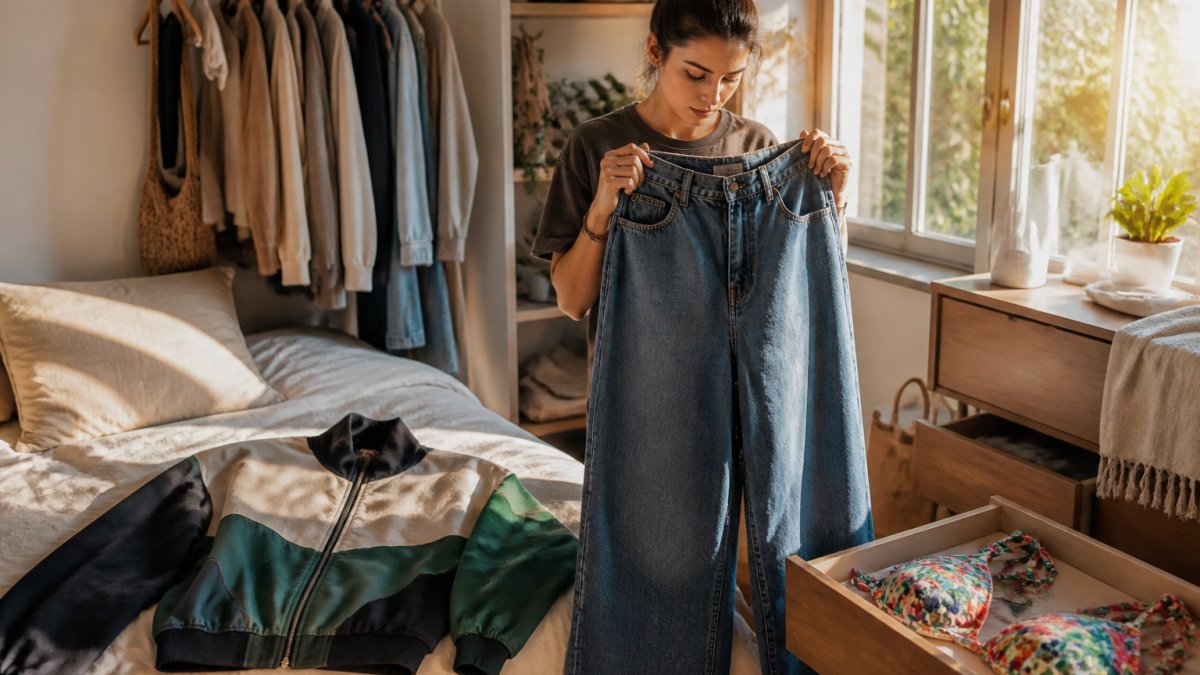
Everyday wear needs denim that survives repeated washing and still looks intentional. The RISEN Slouchy Baggy Jeans deliver a relaxed, effortless silhouette that works with sneakers or boots. For a more polished everyday look, the Judy Blue High Waist Wide Crop Utility Jeans use a high waist and wide crop cut that reads modern without trying too hard.
Both sit at $63.45, so the choice comes down to silhouette, not budget.
Outerwear and Transitional Layers
Transitional weather is the hardest to dress for. You need layers that work at 55 degrees and 70 degrees in the same day.
The VERY J Cable Knit Open Front Cardigan handles spring and fall with a classic tweed front and 95% cotton content. For colder days, the VERY J Fuzzy Leopard Long Sleeve Hooded Jacket adds warmth with a leopard print that makes a statement. The Mittoshop Mineral Wash French Terry Shacket splits the difference with a lived-in mineral wash and button-down closure that works as a light jacket or a heavy shirt.
Swimwear and Spring Fashion
Spring fashion leans toward floral prints and soft structure. The White Birch Floral Two Piece Swim Set covers both with a ruffled, ruched design and removable padding. Sizes run from small through 3XL, which makes it one of the more inclusive options in the category.
Pair it with a cover-up and the VERY J cardigan for a beach day that transitions into evening without a full outfit change.
Shipping, Returns, and In-Store Availability: The Fine Print
Shipping speed, return windows, and whether you can try before you buy are the details that decide whether a store becomes a habit or a one-time experiment.
Online-only stores usually ship faster than they process returns. Check two numbers before ordering: the stated shipping window and the return deadline. A 30-day return window sounds generous until you realize shipping took 12 days.
In-store availability matters if you prefer to try things on. Stores with physical locations let you check fit before committing, which cuts return rates significantly. Online-only retailers compensate with detailed size charts and measurement tables, which is why the numbers on a product page matter so much.
How Often Collections Refresh: Staying Ahead of Seasonal Fashion
Most guides to Target alternatives group stores by price and stop there. They skip the factor that actually decides whether you can buy trendy clothes on purpose instead of by luck: how fast a store turns its inventory, and how you track that cycle.
Reading a Refresh Cycle
Refresh cadence falls into three rough bands:
- Fast (roughly every two to four weeks). Trend-led drops, limited runs, and quick sell-throughs. Great for catching a moment; hard to rebuy.
- Mid (roughly every six to eight weeks). Seasonal transitions, spring to summer, back-to-school, holiday. A reasonable balance of newness and availability.
- Slow (seasonal or year-round core). Basics, denim fits, and layering pieces that stay in stock. Boring on a landing page, reliable in a closet.
The mistake is treating these as quality tiers. They are not. A fast-refresh store can carry excellent fabric; a slow-refresh store can carry dated cuts. The band tells you how to shop it, not whether to trust it.
A Practical Way to Track Drops
You do not need to check a site daily. A few habits cover most of it:
- Sign up for the email list, then filter. New-arrival emails are the cheapest early-warning system. Set a folder and skim once a week.
- Follow the brand's social account, not just the product page. Drops are usually announced on social before they hit the new-arrivals grid.
- Check the new-arrivals sort, not the homepage. Homepages feature what is already selling; new-arrivals shows what just landed.
- Note the sell-through pattern. If a category sells out within a week twice in a row, that store runs fast on that category. Plan accordingly.
Style Versus Basics: A Two-Track Wardrobe
The practical approach is to split your buying by track:
- Trend track. Buy current silhouettes, wide-leg denim, cropped outerwear, color-block layers, from fast-refresh sections. Accept that you may not rebuy them, and price them accordingly.
- Basics track. Buy tees, layering pieces, and core denim from stable collections that stay in stock. These are the pieces you replace in a second color, not a second season.
That split keeps your wardrobe current without forcing a full reset every few months, and it protects you from the most common trap: paying trend prices for basics that never go out of style.
What Is Actually Trending Right Now
Seasonal fashion in 2026 leans toward relaxed and baggy denim silhouettes, layered outerwear with texture (cable knit, mineral wash, faux leather), and floral swimwear with inclusive sizing. Those categories have longer shelf lives than micro-trends, which makes them safer purchases, you get the current look without betting on something that disappears in six weeks.

Common Mistakes When Choosing a Target Alternative for Trendy Clothes
Most first-time switchers make the same four mistakes. Avoiding them saves money and returns.
- Buying on price alone. A cheap garment that pills after two washes costs more per wear than a slightly pricier one that lasts.
- Ignoring the measurement table. Letter sizes vary wildly between brands. Inches do not.
- Trusting vague sustainability claims. If a brand cannot name the material and percentage, the claim is marketing.
- Overbuying in one order. Try two or three pieces first to confirm fit before committing to a full wardrobe.
A common mistake is assuming a lower price means lower quality. In practice, the difference often comes down to branding and retail overhead, not fabric. Check the composition and the construction, then decide.
Conclusion: Building a Wardrobe That Works for Your Budget
Finding a Target alternative for trendy clothes comes down to matching three things: your budget, your size, and how often you actually wear each piece. Get those aligned and the switch pays for itself.
At Myriad Mart, we built our collection around that idea. Our outerwear starts at $37.45, our denim sits at $63.45 with full measurement tables, and our swimwear runs up to 3XL. Every listing names the fabric composition so you know what you are buying before it arrives. We also carry fragrances, grooming products, and home decor alongside apparel, so one order covers more of your list.
Browse the full collection and find the pieces that fit your season, your size, and your budget.
Frequently Asked Questions
What stores are similar to Target for trendy clothes?
A good Target alternative for trendy clothes is any retailer that stocks seasonal styles, everyday basics, and activewear at similar prices. Look for stores that carry denim, outerwear, and swimwear from recognizable labels, publish clear size charts, and ship from within the country. Myriad Mart, for example, lists items like RISEN Slouchy Baggy Jeans at $63.45 and a VERY J Cable Knit Cardigan at $45.45, with measurements for each size so you can compare fit before buying.
Where can I buy affordable trendy clothes besides Target?
Start with retailers that sell a narrow but deep range of trendy pieces rather than a little of everything. Check the starting price, the fabric composition, and whether the size chart lists bust, waist, and hip measurements. On Myriad Mart, outerwear runs from $37.45 for a fuzzy leopard hooded jacket up to $66.45 for a cropped vegan leather jacket, and the denim listings include waist, hip, rise, and inseam for every size, which makes comparing affordable trendy clothing stores much easier.
Are sustainable alternatives to Target actually better for the environment?
It depends on the fabric and how long you keep the item. Cotton and cotton-blend pieces generally break down more easily than synthetic fabrics, while recycled materials reduce demand for new raw material. The bigger factor is wear: a $45 cardigan worn for three seasons has a lower impact than three $15 tops worn once each. Check the material composition on the listing, and favor pieces you can wash cold and tumble dry low so they last.
How do I know the quality is good if the prices are lower than a big-box retailer?
Read the material composition and the care instructions before you buy. A 92.5% cotton denim with 2.5% spandex holds its shape better than a high-synthetic blend, and machine wash cold with tumble dry low usually signals a fabric that survives repeated washing. Also check whether the listing gives per-size measurements. Myriad Mart publishes bust, waist, and hip figures for every size on its jackets and jeans, which is a stronger quality signal than a marketing photo.
What should I check before switching to a new clothing store?
Confirm four things: the return window, the shipping cost and origin, the size chart, and whether the collection refreshes with the season. A store that ships from within the country usually delivers faster and handles returns more simply. If the listing shows measurements for each size and states the fabric content, you can judge fit and durability before ordering, which cuts down on the returns cycle that makes online clothes shopping frustrating.
