
Table of Contents
- Why Canvas Art Sizes Matter More in Small Rooms
- How to Measure Your Wall Before Choosing a Canvas Size
- Standard Canvas Art Sizes That Work in Small Rooms
- How to Arrange Wall Art in Small Spaces
- Canvas Art Placement Guide: Above Furniture and Focal Points
- Affordable Wall Art Ideas for Apartments That Look Expensive
- Portrait, Landscape, or Square: Choosing the Right Orientation
- How Canvas Size Changes the Way Your Room Feels
- Conclusion: Making Small Rooms Look Expensive with the Right Canvas Size
- Frequently Asked Questions
Last Updated: October 13, 2026
Why Canvas Art Sizes Matter More in Small Rooms
Getting canvas art sizes right matters more in a small room than anywhere else in your home. A canvas that's too large swallows the wall. One that's too small leaves the space feeling unfinished. This guide from Myriad Mart breaks down the best canvas art sizes for small rooms, with measuring tricks and budget-friendly picks that look far more expensive than they are.
Here's the good news: you don't need a big budget to make a small room look designed. You need the right dimensions. Most people guess, hang the piece, and wonder why the room still feels cramped. The fix takes about ten minutes with a tape measure.
Small rooms punish bad proportions. In a large living room, a slightly off canvas disappears into the space. In a small bedroom or apartment nook, every inch counts. The wrong print size can make a wall look shorter, a ceiling feel lower, or a corner feel cluttered.
That's why the canvas art sizes you choose should come before the artwork itself. Pick the size first, then find a design you love in that size.
How to Measure Your Wall Before Choosing a Canvas Size
Measure your wall first, then buy. Start by measuring the full width of the empty wall, then subtract the space taken up by doors, windows, and furniture. The number left is your usable wall space, and it decides everything else.
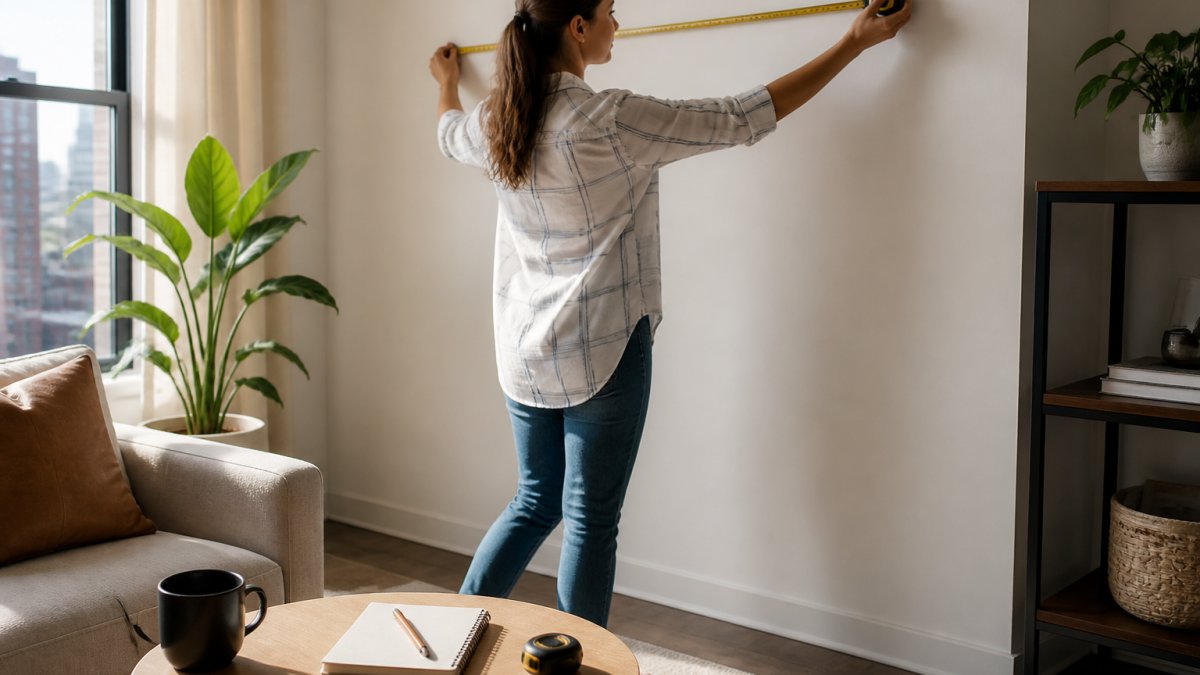
Here's the simple method we recommend:
- Measure the wall's full width in inches and write it down.
- Measure any furniture sitting against that wall, like a sofa or dresser.
- Subtract furniture width from wall width to get usable space.
- Multiply usable space by 0.6 to 0.75 to find your target canvas width.
- Tape paper outlines to the wall before you buy anything.
That last step saves more returns than any other trick. Cut newspaper or craft paper to the exact canvas dimensions, tape it up, and live with it for a day. If it looks too small, size up.
The 2/3 Rule for Small Walls
The 2/3 rule is the fastest way to size art for a small wall. Your canvas should cover roughly two-thirds of the wall width above a piece of furniture. If your sofa is 60 inches wide, aim for a canvas around 40 inches wide.
This rule works because it keeps the art tied to the furniture below it. A canvas that's too narrow looks lost. One that stretches past the furniture edges makes the whole arrangement feel top-heavy.
For a narrow wall with no furniture, use the wall itself. A canvas covering about two-thirds of a narrow wall reads as a single statement piece. Anything smaller starts to look like a stamp.
Ceiling Height and Viewing Distance
Low ceilings change the math. In a room with a ceiling under 8 feet, keep your canvas shorter and wider. A tall portrait piece can make a low ceiling feel like it's pressing down.
Viewing distance matters just as much. For a canvas you view from a sofa a few feet away, a smaller print holds up fine. For art seen across the room, go bigger so the details stay readable.
A quick guide:
- Close viewing, under 3 feet: 8x10 to 11x14 inches works
- Mid-range, 3 to 6 feet: 12x16 to 18x24 inches fits well
- Across the room, 6 feet and up: 20x30 inches or larger
Standard Canvas Art Sizes That Work in Small Rooms
The best canvas art sizes for small rooms fall into two groups: small prints for tight walls and mid-size prints for main walls. Knowing which group fits your space keeps you from overbuying.
Small Canvas Sizes (8x10, 11x14, 12x16 Inches)
Small canvas prints are the workhorses of tight spaces. An 8x10 inch canvas fits a bathroom wall, a hallway nook, or a slice of wall beside a door. An 11x14 inch print works above a small desk or a nightstand. A 12x16 inch canvas suits a narrow wall or a gallery grouping.
These sizes are also the cheapest to buy and the easiest to swap out each season. Buy two or three in the same size and rotate them.
Mid-Size Canvas Sizes (16x20, 18x24, 20x30 Inches)
Mid-size canvases anchor the main wall of a small room. A 16x20 inch print works above a dresser or a small sofa. An 18x24 inch canvas suits a full wall above a couch. A 20x30 inch piece becomes the focal point of a small living room.
If your room is tight but your main wall is open, a 16x24 inch canvas hits a sweet spot. Our Upgrade Your 12x18 Inches 'Hummingbird Spring' Canvas to 16x24 Inches is a good example of sizing up without overwhelming a wall. It's made in the US on 1.5-inch thick premium canvas, and the UV-resistant ink keeps the colors from fading.

| Canvas Size | Best Wall | Pairs Well With |
|---|---|---|
| 8x10 inches | Bathroom, hallway nook | Single piece or gallery set |
| 11x14 inches | Above a desk or nightstand | Small gallery grouping |
| 12x16 inches | Narrow wall | Two or three in a row |
| 16x20 inches | Above a dresser | Single statement piece |
| 18x24 inches | Above a sofa | Main focal point |
| 20x30 inches | Open living room wall | Large single piece |
How to Arrange Wall Art in Small Spaces
Learning how to arrange wall art in small spaces comes down to one idea: fewer, bigger pieces beat many small ones. A cluster of tiny frames adds visual noise, and noise makes a room feel smaller. The fix is to treat the wall as one composition, not a collection of separate purchases.
Start with a paper mockup before you commit. Cut newspaper or craft paper to the exact dimensions of each canvas, tape the pieces to the wall, and leave them up for a full day. This is the single cheapest way to avoid a return, and it lets you test a layout without spending a dime. If the paper looks too small from across the room, size up before you buy.
For a single piece, center it on the wall or above the furniture. Keep the center of the canvas at eye level, roughly 57 to 60 inches from the floor. In a room with a low ceiling, drop that center point by an inch or two so the art sits closer to the furniture and the wall above it doesn't feel empty.
For a gallery grouping, treat the whole set as one shape. Lay the pieces on the floor first and arrange them until the outer edges form a clean rectangle or square. Keep gaps between frames consistent, around 2 to 3 inches. A common pattern is to use one larger anchor piece and surround it with smaller canvases in the same color story, which reads as intentional rather than random.
Upgrade Your 12x18 Inches 'Hummingbird Spring' Canvas to 16x24 Inches →
Spacing rules that keep small rooms calm:
- Between frames: 2 to 3 inches, measured edge to edge
- Above furniture: 6 to 10 inches from the bottom of the canvas to the top of the sofa, bed, or dresser
- From the ceiling: leave at least 6 inches so the art doesn't crowd the ceiling line
- From a corner: keep at least 6 inches so the piece has room to breathe
If your wall still feels cluttered after hanging, remove one piece. Small rooms reward restraint, and a single well-sized canvas often looks more expensive than a crowded gallery. Rotate the pieces you remove to another wall or store them for a seasonal swap, which gives you a fresh look without buying anything new.
Canvas Art Placement Guide: Above Furniture and Focal Points
This canvas art placement guide starts with one rule: leave 6 to 10 inches of space between the bottom of the canvas and the top of your furniture. That gap ties the art to the piece below it instead of letting it float.
Above a sofa, aim for a canvas that spans about two-thirds of the sofa's width. Above a bed, a single wide canvas or a matching pair works better than a tall vertical piece. Above a dresser or console, center the canvas on the furniture, not the wall.
Focal points deserve the biggest piece in the room. If your small room has a fireplace, a large window, or one open wall, give that spot your largest canvas and keep the other walls simple.
Affordable Wall Art Ideas for Apartments That Look Expensive
Affordable wall art ideas for apartments come down to smart sizing and a few visual tricks. You can spend very little and still get a high-end look. The key is to spend where the eye notices and save where it doesn't.
Try these money-saving moves:
- Buy one large canvas instead of five small frames. Fewer pieces means lower cost and a cleaner wall. One 24x36 inch canvas often costs less than five 8x10 inch frames once you add mats and hanging hardware.
- Size up a smaller print on a thick canvas. The extra depth reads as premium. A 1.5-inch canvas wrap casts a subtle shadow that mimics a gallery frame, so you get the framed look without the frame price.
- Skip the custom frame. Canvas wraps need no frame at all, which saves money and wall space. Custom framing can easily cost more than the art itself, and in a small room the frame adds visual weight you don't need.
- Stick to one color story. Matching tones across two or three pieces looks curated, not cheap. Pull two colors from your room's existing textiles and repeat them in the art.
- Rotate seasonal prints. Two canvases in the same size give you four looks a year. Store the off-season piece flat under a bed or behind a dresser to keep it dust-free.
- Hang a canvas without nails. Adhesive strips rated for the canvas weight let renters avoid wall damage and deposit deductions. Check the weight rating on the package and use two strips per pound of art as a safety margin.
- Use a level and a pencil. A crooked canvas looks cheap no matter what you paid. A $5 level and a light pencil mark save you from patching holes later.
A common pattern among renters is to buy one statement canvas for the main wall and use smaller, inexpensive prints for secondary spaces like a bathroom or hallway. This concentrates your budget where guests actually look and keeps the rest of the apartment calm.
If you're handy, you can also stretch your own canvas over a wooden frame from a craft store. The materials are inexpensive, and the result is a custom size that fits an awkward wall exactly. Just keep the canvas taut and prime it before painting or printing.
Portrait, Landscape, or Square: Choosing the Right Orientation
Orientation changes how a wall reads. A landscape canvas stretches a wall wider and suits low ceilings. A portrait canvas draws the eye upward and adds height to a short wall. A square format sits in the middle and works almost anywhere.
In a small room, match orientation to the wall shape:
- Wide, short wall: landscape orientation
- Narrow, tall wall: portrait orientation
- Square nook or above a round table: square format
If you're unsure, landscape is the safest pick for small rooms. It follows the natural line of most furniture and keeps low ceilings from feeling heavy.
How Canvas Size Changes the Way Your Room Feels
Canvas size changes perceived room scale more than almost any other decor choice. A large canvas on a small wall can make the room feel bigger, because it gives the eye one bold thing to rest on. Several small prints do the opposite and chop the wall into busy pieces.
This is the part most guides skip. Size isn't just about filling space. It's about controlling how big the room feels when you walk in.
Here's how it plays out:
- One oversized piece: room feels open and intentional
- A tidy pair or trio: room feels balanced and cozy
- Many tiny frames: room feels cluttered and cramped
The trick is pairing a bold canvas with calm walls and simple furniture. Let the art do the work.
Conclusion: Making Small Rooms Look Expensive with the Right Canvas Size
Small rooms don't need big budgets. They need the right canvas art sizes, measured against the wall and the furniture, then hung at the right height. Get those three things right and a modest print looks like a designer piece.
At Myriad Mart, we carry canvas art in sizes that fit small spaces. Every piece is made in the US on 1.5-inch thick premium canvas, printed with UV-resistant ink that holds its color for decades, and custom-made to order. You get the high-end look without the high-end price.
View all and find the size that makes your small room feel twice as big.
Frequently Asked Questions
What is the best canvas size for a small wall?
For a small wall, aim for a canvas that covers about two-thirds of the available width. If your wall is 36 inches wide, a 24-inch canvas works well. Standard sizes like 16x20 or 18x24 inches fit most small rooms without overwhelming the space. Measure your wall first, then pick a size that leaves 6 to 12 inches of breathing room on each side.
Can large canvas art work in a small room?
Yes, a large canvas can work in a small room if it fits the wall's proportions. A single statement piece that covers two-thirds of the wall width creates a focal point and can make the room feel bigger. Avoid canvases that stretch nearly edge to edge, as they shrink the perceived space. A 20x30-inch canvas on a 40-inch wall is a good balance.
How do I arrange wall art in small spaces without clutter?
Stick to one or two pieces per wall. Use a single large canvas or a tight gallery grouping of three smaller prints. Keep the center of the art at eye level, about 57 to 60 inches from the floor. Leave at least 2 inches between frames in a grouping. This keeps the wall from feeling busy and helps the room feel open.
What are the most common canvas sizes for apartment living?
The product catalog lists canvas upgrades to 16x24 or 18x24 inches. These sizes can work well for various spaces, with 16x24 inches being suitable for a main wall and 18x24 inches potentially serving as a statement piece.
