
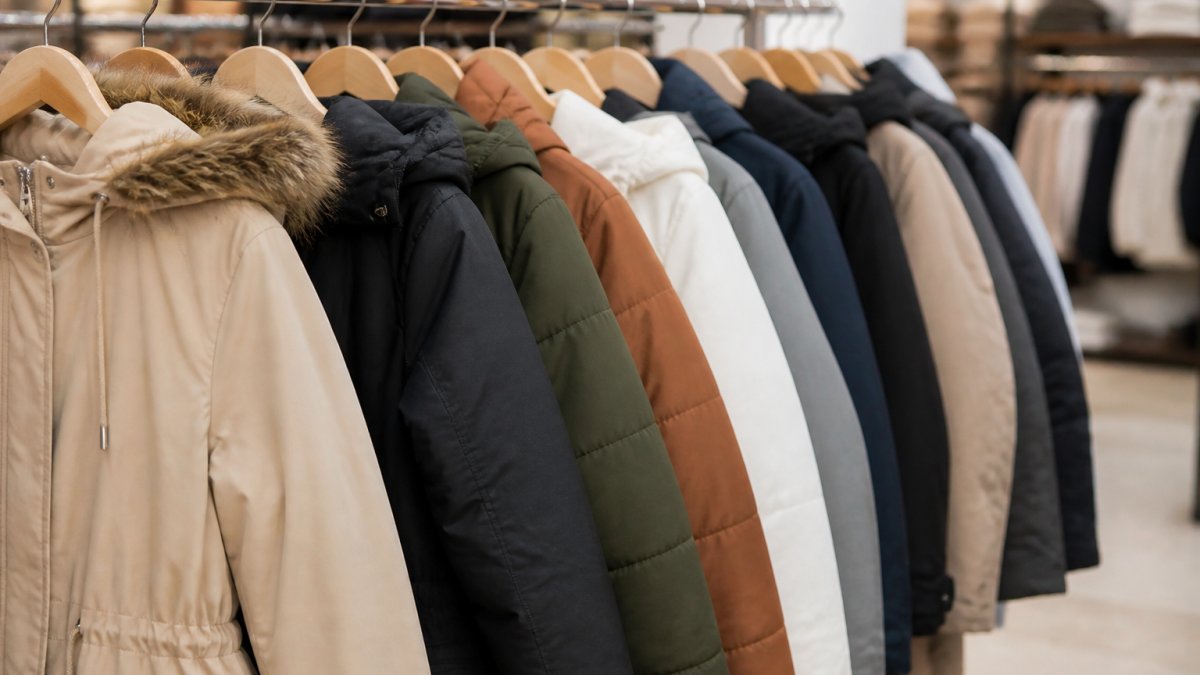
Table of Contents
- Best Affordable Winter Coats 2026: Quick Comparison
- Best Materials for Winter Warmth
- How to Layer for Winter
- Fit, Sizing and Style for Every Body
- Winter Coat Care Tips
- Cost Per Wear: Why Affordable Winter Coats Win
- Frequently Asked Questions
Last Updated: September 28, 2026
Best Affordable Winter Coats 2026: Quick Comparison
Finding the best affordable winter coats 2026 has less to do with price tags and more to do with what's inside the garment. A coat that keeps you warm for five winters costs far less per wear than a cheap one that fails by February. This guide from Myriad Mart breaks down materials, layering, fit, and care so you can shop with confidence rather than guesswork.
Coat Type |
Warmth Level |
Weather Resistance |
Best For |
|---|---|---|---|
Quilted puffer |
High |
Water-repellent |
Everyday cold, commuting |
Wool-blend topcoat |
Medium |
Wind-resistant |
Work and smart-casual |
Parka with synthetic-fill |
Very high |
Weatherproof |
Deep winter, wet climates |
Down-alternative trench |
Medium |
Water-repellent |
Mild winters, layering |
Peacoat |
Medium-high |
Wind-resistant |
City wear, versatility |
Best Materials for Winter Warmth
Wool and wool-blend fabrics remain the gold standard for warmth without bulk, while synthetic-fill and down-alternative options deliver strong insulation at lower cost. The material inside a coat determines its temperature rating more than the brand name on the label, but warmth alone is only half the story. A coat that traps heat and soaks through is worse than a thinner coat that sheds rain.
- Wool-blend: Blends with a high wool content hold heat well and resist wind. Cheaper blends lean on polyester, which reduces warmth. A 60/40 wool-poly blend is a common affordable sweet spot; below 50% wool, expect noticeably less warmth.
- Synthetic-fill: Polyester-based fills mimic down's loft and handle damp conditions better than natural down. Look for fill power equivalents in the 550-650 range for everyday winter use.
- Down-alternative: A practical, cruelty-free choice that stays warm when wet and costs less than true down. It also dries faster, which matters in wet climates.
- Quilted construction: Stitching creates pockets that trap air, boosting thermal efficiency without weight. The tighter the quilt pattern, the less cold air migrates between chambers.
Weather Resistance: The Specs That Actually Matter
Warmth without weather protection is a fair-weather coat. Here's how to read the labels and construction details that separate a coat that survives a sleet storm from one that soaks through in ten minutes.
- DWR (Durable Water Repellent): A factory-applied finish that makes water bead and roll off. It wears off over time and can be restored with a spray-on or wash-in treatment. DWR is not waterproofing, it's a first line of defense.
- Waterproof membranes: Look for names like Gore-Tex, eVent, or generic PU (polyurethane) laminates. These block liquid water while letting vapor escape. A 10K/10K rating (10,000mm waterproof, 10,000g breathability) is the practical minimum for sustained rain; 5K/5K is fine for light snow and city slush.
- Taped or sealed seams: The weakest points of any waterproof coat are the stitch lines. Critically taped seams, where the tape covers the stitch holes, are the standard for true waterproofing. Unsealed seams leak under pressure.
- Windproofing: Wind robs warmth faster than cold alone. Tightly woven shells, storm flaps over zippers, and elastic or adjustable cuffs all reduce wind penetration. A coat can be warm and still feel freezing if wind cuts through it.
Climate-Specific Picks
Most guides treat "winter" as one thing. It isn't. Match the coat to your actual climate:
- Mild city winters (30-50°F / 0-10°C): A wool-blend topcoat or down-alternative trench with DWR handles commuting, office wear, and light rain. You don't need a parka.
- Standard cold winters (15-30°F / -10-0°C): A quilted puffer or peacoat with a wind-resistant shell and a mid-layer underneath covers most days. Prioritize windproofing over waterproofing.
- Wet winters (rain, sleet, coastal): A parka with a waterproof membrane, taped seams, and synthetic fill. Down fails when wet; synthetic fill keeps loft.
- Arctic/extreme winters (below 15°F / -10°C): A long parka with high-loft synthetic or 650+ fill power down, storm flaps, a hood with a faux-fur or insulated brim, and room for a heavy mid-layer. This is the one category where spending more genuinely buys performance.
How to Layer for Winter
Layering for winter means building three functional layers: a moisture-wicking base, an insulating mid-layer, and a weatherproof outer shell. Each layer adds warmth and versatility without forcing you to buy one heavy coat.
The three-layer system:
- Base layer: Merino wool or a synthetic blend that pulls sweat away from skin.
- Mid-layer: A fleece, sweater, or lightweight quilted vest for insulation.
- Outer layer: Your winter coat, chosen for wind and water resistance.
Fit, Sizing and Style for Every Body
- Hourglass and fit-and-flare: Belted styles define the silhouette without bulk.
- Rectangle builds: Quilted or structured coats add visual shape.
- Pear shapes: A-line and trench cuts balance proportions.
- Broad shoulders: Raglan sleeves and dropped shoulders ease tension.
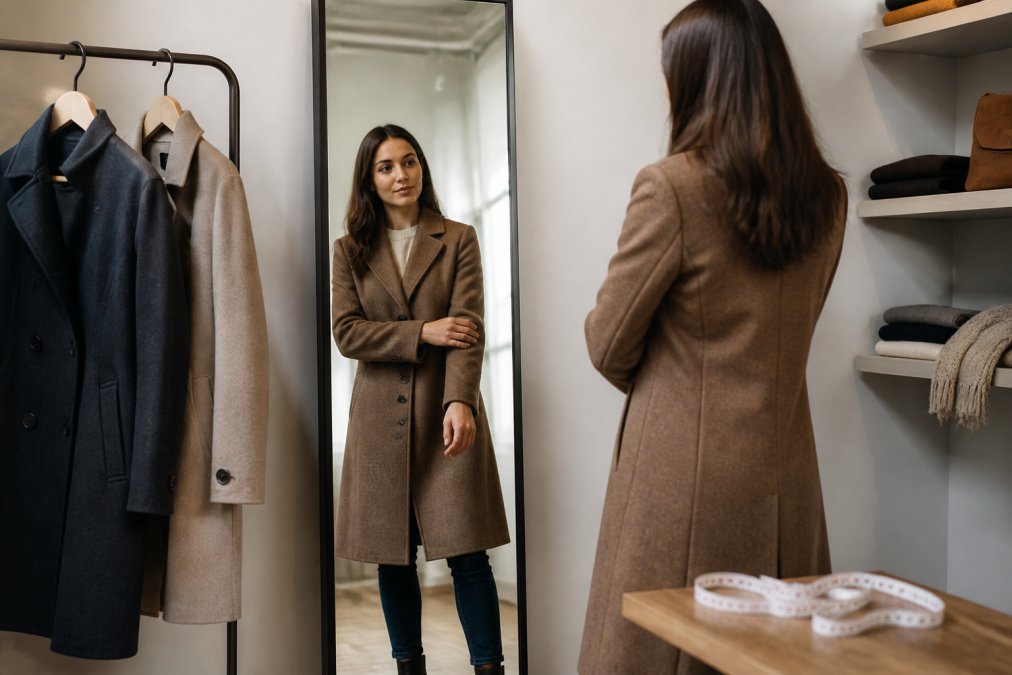
Try coats on over the sweater you'll actually wear. That single habit prevents most returns.
Winter Coat Care Tips
Proper garment-care extends a coat's life by years, which is the simplest way to keep winter outerwear affordable. Most damage comes from washing mistakes, not from wearing the coat.
Follow these winter coat care tips:
- Spot-clean small marks instead of washing the whole coat.
- Follow the label. Wool often needs dry cleaning; synthetics usually machine-wash cold.
- Air-dry flat to protect the fill's loft. Heat destroys insulation.
- Store on a wide hanger in a breathable garment bag, never plastic.
- Brush wool with a soft brush to lift fibers and remove surface dirt.
Cost Per Wear: Why Affordable Winter Coats Win
Cost-per-wear is the price of a coat divided by the number of times you wear it. A coat worn daily across one winter can cost less per wear than a trend piece worn twice. But the formula only becomes useful when you plug in real numbers and account for how long the coat actually lasts.
The Math, Worked Out
Assume a 120-day winter season and a coat worn four days a week, roughly 70 wears per season.
- Coat A: Lower upfront price, lasts one season. Cost per wear = price ÷ 70.
- Coat B: Higher upfront price, lasts four seasons. Cost per wear = price ÷ 280.
What Actually Makes a Coat Last
Durability isn't a brand promise; it's a set of construction details you can inspect:
- Reinforced seams: Look for double-stitched or bar-tacked stress points at pockets, shoulders, and the hem. Single stitching on a heavy coat is a warning sign.
- Zipper quality: Metal zippers with smooth pulls outlast plastic ones. YKK is a commonly cited benchmark for reliable zippers.
- Fill retention: Synthetic fills lose loft over time, especially with poor washing. Down and high-quality down-alternatives hold loft longer when cared for properly.
- Lining integrity: A torn lining is the most common failure point in affordable coats. A tightly woven, stitched-in lining adds years of life.
- Shell fabric denier: Higher denier (thicker yarn) resists abrasion. A 40D-70D shell is a reasonable durability target for everyday wear.
The Climate and Layering Multiplier
Cost per wear isn't just about the coat, it's about how many conditions the coat covers. A single versatile outer layer paired with two mid-layers can handle more weather than three separate heavy coats, which means each piece gets worn more often and its cost per wear drops.
- A waterproof shell worn over a fleece covers wet 40°F days and dry 20°F days.
- A wool topcoat worn over a sweater covers office days and dinners.
- A packable puffer worn under a shell covers the coldest snaps.
The Sustainability Angle Competitors Skip
Cost per wear is also the most practical sustainability metric a shopper can use. A coat worn for eight seasons displaces seven coats that would have been manufactured, shipped, and discarded. When you're comparing options, prioritize:
- Repairability: Replaceable zippers, available buttons, and accessible tailoring.
- Timeless silhouettes: A classic peacoat or parka stays wearable across trend cycles; a heavily logoed or trend-specific piece dates quickly.
- Material longevity: Wool and high-quality synthetics age better than thin, loosely woven blends.
- Care instructions you'll actually follow: A coat that requires dry cleaning after every wear has a hidden cost that erodes its affordability.
Run the math yourself before you buy:
- Estimate how many days per season you'll realistically wear the coat.
- Estimate how many seasons it will last based on construction quality.
- Divide price by (wears per season × seasons).
- Compare that number across your shortlist, not the sticker price.
Frequently Asked Questions
What features should I look for in an affordable winter coat?
Prioritize insulation, a wind-resistant outer shell, and a water-repellent finish. Check the textile composition: wool-blend or synthetic-fill coats hold warmth well, while quilted linings add thermal efficiency. Look for sealed seams, a high collar, and roomy pockets. A good fit at the shoulders matters more than a designer label, and it keeps the coat in rotation for years.
Are affordable winter coats warm enough for extreme cold?
Many are, if you choose the right build. A down-alternative or synthetic-fill coat with a temperature rating suited to your climate and a wind-resistant shell handles most winters. For extreme cold, layer a thermal base and a wool-blend mid-layer underneath. Check the insulation weight and whether the coat blocks wind, since that matters as much as thickness.
How do I choose the right winter coat material for my climate?
Match the material to your conditions. Wet, windy winters suit water-repellent synthetic-fill parkas with sealed seams. Dry, freezing winters favor down or down-alternative insulation and wool-blend topcoats. Mild winters work with a quilted trench or lighter peacoat. Layering lets one affordable coat cover several climates, so start with the shell and adjust the mid-layer.
Is it better to buy a synthetic or down-filled winter coat?
Both work well. Down-filled coats deliver strong warmth for their weight, but they lose insulation when wet and cost more. Synthetic-fill coats stay warm when damp, dry faster, and usually cost less, which suits budget shoppers and wet climates. A down-alternative fill is a practical middle ground. Weigh warmth, weather, and cost-per-wear before deciding.
