

Last Updated: October 23, 2026
Quick Summary
Online prices are only about 1% lower overall than in-store prices once identically priced items are counted, so the gap is far smaller than most shoppers assume. A 2014 comparison found 69% of consumer products had the same price online and offline. Hidden costs like shipping and returns can erase the difference entirely.
- In-store shopping wins the price comparison more often than people expect, and the gap swings both ways by product.
- Online sellers still pay for fulfillment space, pick-and-pack labor, shipping, returns processing, and platform fees.
- A 2026 price-tracking study found 46% of products changed price at least once within 30 days.
- Compare total cost by adding tax, delivery or pickup costs, and estimated return risk before deciding.
- Ask about price matching before you buy, since many retailers will match a competitor or their own website.
Table of Contents
- Why Are Online Prices Cheaper? What the Data Actually Shows
- Online vs. In-Store Prices: Where the Gap Comes From
- Store Overhead, Rent, and Staffing: The Costs Online Retailers Skip
- Is It Cheaper to Buy Online or in Store? It Depends on the Product
- Online Shopping Hidden Costs That Erase the Sticker Savings
- Pricing Strategies Retailers Use Across Channels
- How to Compare Prices Online and In Store for the True Final Cost
- Price Matching, Promotions, and Your Consumer Recourse
- Conclusion
- Frequently Asked Questions
Why Are Online Prices Cheaper? What the Data Actually Shows
Online prices are cheaper on average, but only by a sliver. A research team reported by the American Economic Association's retail price reality check found online prices were just 1% lower overall once items with identical prices were included. That gap is real, but it is nowhere near the discount most shoppers imagine.
So why does the myth persist? Because a lower sticker price is easy to see and the total cost is not. At Myriad Mart, we watch this play out every day: shoppers compare a cart total to a shelf tag, then get surprised at checkout by shipping, returns, or a price that quietly moved.
Below, we break down where the gap actually comes from, when online prices run higher, and how to compare the true final cost before you pay.
The 1% Reality: Online Prices Are Not Always Much Lower
The popular assumption is that online shopping is cheaper because it skips the store. The numbers don't back that up.
A 2014 comparison cited by MarketingProfs, drawing on an Anthem Marketing Solutions report found that 69% of consumer products had the same price online and offline. When prices did differ, the average savings ran 32% in-store versus 26% online, though the report does not clarify how that figure was calculated.
That is the first surprise: in-store shopping wins the price comparison more often than people expect. A price difference exists, but it swings both ways depending on the product.
Online vs. In-Store Prices: Where the Gap Comes From
Three forces explain most of the online price advantage, and none of them is universal.
- Lower overhead. Online retailers may carry fewer costs because they don't run storefronts.
- Easy comparison. Consumers can check several retailers in minutes, which pressures prices down.
- Online-only deals. Retailers use web promotions to drive online sales and clear inventory.
The catch is that these advantages vary by retailer and category. A large chain with both channels can price identically and still profit online.
Store Overhead and Operating Costs
A study of 123 subjects found that consumers perceive online retailers as having lower overhead costs than store-based retailers, according to research listed on ResearchGate. That perception is a big part of why people expect cheaper online prices.
But expectation is not the same as a guarantee. Lower overhead gives a retailer room to cut prices. It does not obligate them to.
Store Overhead, Rent, and Staffing: The Costs Online Retailers Skip
Physical stores carry costs that a warehouse does not. Rent, staffing, utilities, and in-store inventory all add to the operating costs a retailer must recover somewhere.
- Rent for retail space in a busy area
- Staffing costs for sales, stocking, and checkout
- Store fixtures, lighting, and climate control
- Shrinkage from theft and damage
Online sellers trade those for warehouses and distribution costs. The real difference between the two channels comes down to which cost structure is leaner for a given product.
The costs online retailers do not skip
The overhead story is usually told as if the warehouse is free. It is not. An online seller still pays for:
- Fulfillment space. Warehouses near population centers cost money per square foot too, and they need racking, packing stations, and climate control for some goods.
- Pick-and-pack labor. Every order is handled individually. A store clerk stocks a shelf once; an online picker touches the same item for every single order.
- Shipping and delivery. Parcel carriers charge by weight, size, and speed. That cost is either baked into the price or added at checkout.
- Returns processing. Returned items must be received, inspected, repackaged, and sometimes resold at a discount. Industry practitioners commonly describe returns as one of the largest hidden costs in e-commerce.
- Payment processing and platform fees. Card networks charge per transaction, and marketplace sellers pay commission on top.
That is why the overhead gap is smaller than shoppers assume. A store pays for the shelf; an online seller pays for the last mile. For a light, high-margin item, the online structure can be leaner. For a heavy, low-margin item, shipping can erase the advantage entirely.
Why lower overhead does not always mean a lower price
Lower overhead gives a retailer room to cut prices. It does not obligate them to. A retailer with both channels may keep prices identical online and in store and simply bank the difference, or use the online channel to reach customers it could never serve from a single location.
A common pattern is that the channel with the leaner cost structure for a given product is the one that ends up cheaper, and the channel with the heavier structure is the one that runs promotions to compensate. That is why the same retailer can be cheaper online for one item and cheaper in store for the next.
Is It Cheaper to Buy Online or in Store? It Depends on the Product
There is no single answer. It depends on the product, the retailer, and the day.
Some categories lean online because bulk purchasing and lean distribution let a seller undercut store margins. Others lean in-store because shipping a heavy or bulky item costs more than the shelf space it sits on.
Here is how the trade-offs usually break down:
| Factor | Favors Online | Favors In-Store |
|---|---|---|
| Overhead costs | Lower | Higher |
| Price comparison | Instant, many sellers | Limited to the store |
| Shipping | Added cost | None |
| Returns | Often by mail | Immediate, in person |
| Product inspection | Photos only | See and touch |
| Availability | Broad inventory | What's on the shelf |
The practical takeaway: check both channels for anything expensive. The channel that wins changes with the item.
Online Shopping Hidden Costs That Erase the Sticker Savings
A low online price can vanish by checkout. These are the hidden costs that eat the difference:
- Shipping fees, especially on bulky or fast delivery
- Return shipping when a size or color is wrong
- Restocking fees on some categories
- Membership or minimum-order thresholds to unlock free delivery
- Currency or payment surcharges on some sites
Add those up and the online price advantage can flip. A 1% average gap does not survive a return shipping charge.
Pricing Strategies Retailers Use Across Channels
Retailers rarely set one price and leave it. They run different pricing strategies online and in stores, and understanding the playbook helps you spot a real deal.
How online prices actually move
Online prices can change constantly. The same 2026 study found prices shifting about every six days for products that changed at all. That is dynamic pricing in action: algorithms adjust to demand, competition, and inventory.
The mechanisms behind those shifts are worth knowing:
- Automated repricing. Sellers set rules that adjust price when a competitor changes theirs, when stock runs low, or when a demand signal spikes.
- Demand and inventory signals. A product that is selling fast may rise in price; slow movers get marked down to clear space.
- Browsing context and personalization. Some sites vary offers based on location, device, membership status, or purchase history. The same item can show different prices to different shoppers.
- Time-limited promotions. Flash deals and member-only prices create the impression of a permanent discount when the window is actually short.
In stores, prices are stickier. Shelf tags get updated on a schedule, not by the hour. That means an in-store price can lag behind a fast-moving online price, in either direction.
When online prices are higher
The query assumes online is cheaper, but the opposite happens more often than shoppers expect. Common reasons:
- Marketplace fees. Third-party sellers on large marketplaces pay commission, and that cost lands in the price.
- Delivery costs. Bulky, heavy, or fast-shipping items can cost more to deliver than the shelf space they occupy.
- Limited stock and scarcity. A hard-to-find item online may carry a premium because the seller knows it is scarce.
- Online-specific surcharges. Some sellers add handling fees, small-order fees, or restocking fees that never appear on a store tag.
- Convenience pricing. Delivery to your door has value, and some retailers price it in.
Other common tactics cut across both channels:
- Online-only deals to push shoppers to the website
- Personalized offers based on browsing and purchase history
- Loss leaders on a few items to draw traffic
- Bundle pricing that hides the per-item cost
The thing nobody tells you about channel pricing is that the cheapest listed price is rarely the cheapest final price. A price that moves every few days is also a price you can miss: the deal you saw yesterday may not be there when you check out.
How to Compare Prices Online and In Store for the True Final Cost
Sticker price is the wrong number to compare. Total cost is the right one. Here is the method we recommend.
Step 1: Write down the full price at each channel. Include tax and any mandatory fees.
Step 2: Add delivery or pickup costs. Online shipping versus the gas and time to drive to a store.
Step 3: Estimate return risk. If there's a real chance you'll return it, price the return shipping or restocking fee.
Step 4: Check availability and timing. A lower price you can't get this week may not help.
Step 5: Compare the totals, not the tags.
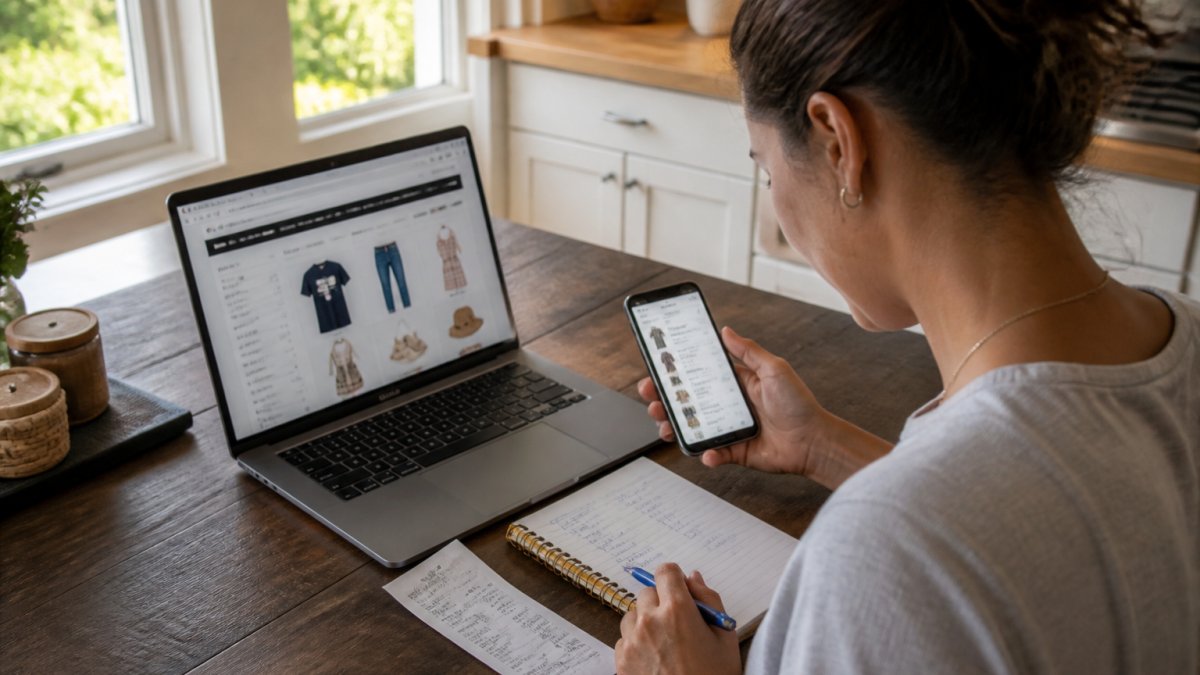
Run this for anything over a trivial amount. The channel that wins on sticker price often loses on total cost.
Price Matching, Promotions, and Your Consumer Recourse
Price matching is your best tool, and most shoppers never use it. Many retailers will match a lower price from a competitor or their own website if you ask before buying.
Promotions and discounts are worth timing. Retailers run online-only deals to drive online sales, and those can beat the shelf price. But check the terms: some promotions exclude returns or require a membership.
On your rights, the Federal Trade Commission's guidance on below-cost pricing notes that low prices generally benefit consumers, and harm arises only when a dominant competitor prices below cost to eliminate rivals. In plain terms, a low price is usually just a good deal, not a red flag.
Your recourse when a price drops after purchase:
- Ask about a price adjustment within the return window
- Check the price-match policy before you buy
- Keep your receipt and note the date
Conclusion
The real answer to why online prices are cheaper is that they often aren't, at least not by much. The average gap is small, many products cost the same in both channels, and hidden costs can wipe out the difference entirely.
What actually saves money is comparing total cost, checking price-match policies, and timing your purchase around real promotions. At Myriad Mart, we built our catalog around exactly that idea: premium fashion, fragrances, grooming products, and home decor at prices that hold up once shipping and returns are counted. You get a wide selection in one place, seasonal styles that stay current, and savings on the premium items you actually want.
Ready to see the difference for yourself? Browse the full collection and compare the final cost, not just the tag.
Frequently Asked Questions
Are online prices usually cheaper than in-store prices?
Not by much, and not always. A 2014 comparison cited by MarketingProfs found 69% of consumer products had identical online and offline prices. When prices did differ, the American Economic Association reported online prices were only 1% lower overall. A 2026 Pricerest study adds context: 46% of products changed price at least once in 30 days, and 56% of price cuts were reversed within 14 days, so a low online price may be a temporary promotion rather than a permanent channel advantage.
Is it cheaper to buy online or in store once shipping and returns are counted?
Compare the final cost, not the sticker. Add shipping, delivery fees, and return shipping to the online price, then add travel time, fuel, and parking to the in-store price. Online shopping hidden costs such as restocking fees or paid return labels can erase a small discount. A 2014 comparison cited by MarketingProfs reported average savings of 32% in-store versus 26% online when prices differed, which shows the cheaper channel varies by product and retailer.
Why do retailers offer lower prices online?
Online sellers avoid rent, staffing, and store operating costs that physical retailers carry. A study of 123 subjects listed on ResearchGate found consumers perceive online retailers as having lower overhead, and The Balance notes online retailers may have fewer overhead costs. Retailers also use online-only deals and promotions to drive online sales and collect customer data. That said, the Federal Trade Commission notes low prices generally benefit consumers, so a lower online price is not automatically a red flag.
How can I compare prices online and in store accurately?
Match the exact model, size, and color, then calculate the total: item price plus shipping or travel, taxes, and expected return costs. Check whether the retailer offers price matching, since a store may match its own website or a competitor. Watch for dynamic pricing and personalized offers that change by device or account. A 2026 Pricerest study found prices changed about every six days, so recheck the price close to your purchase date instead of relying on a screenshot from last week.

